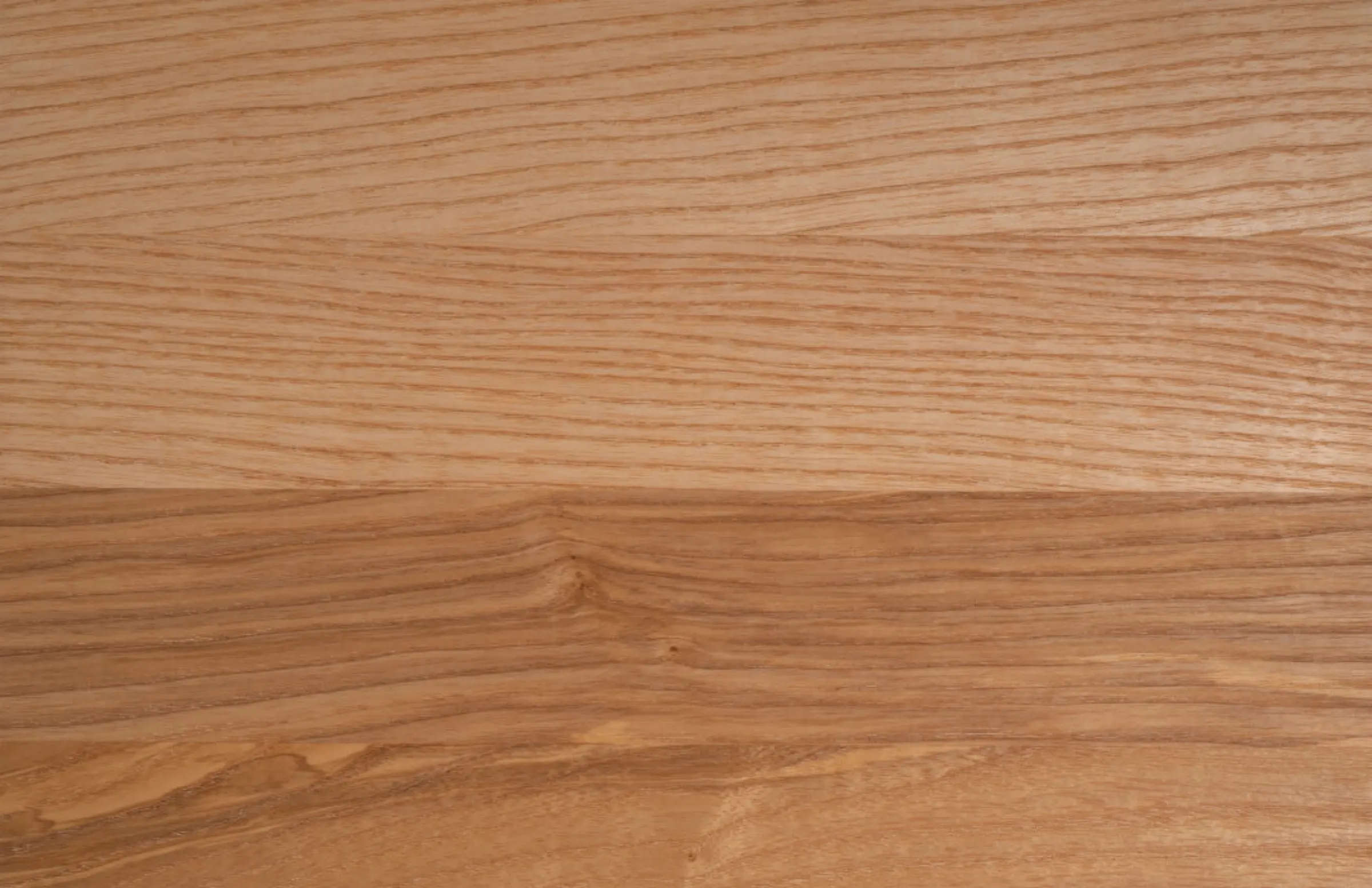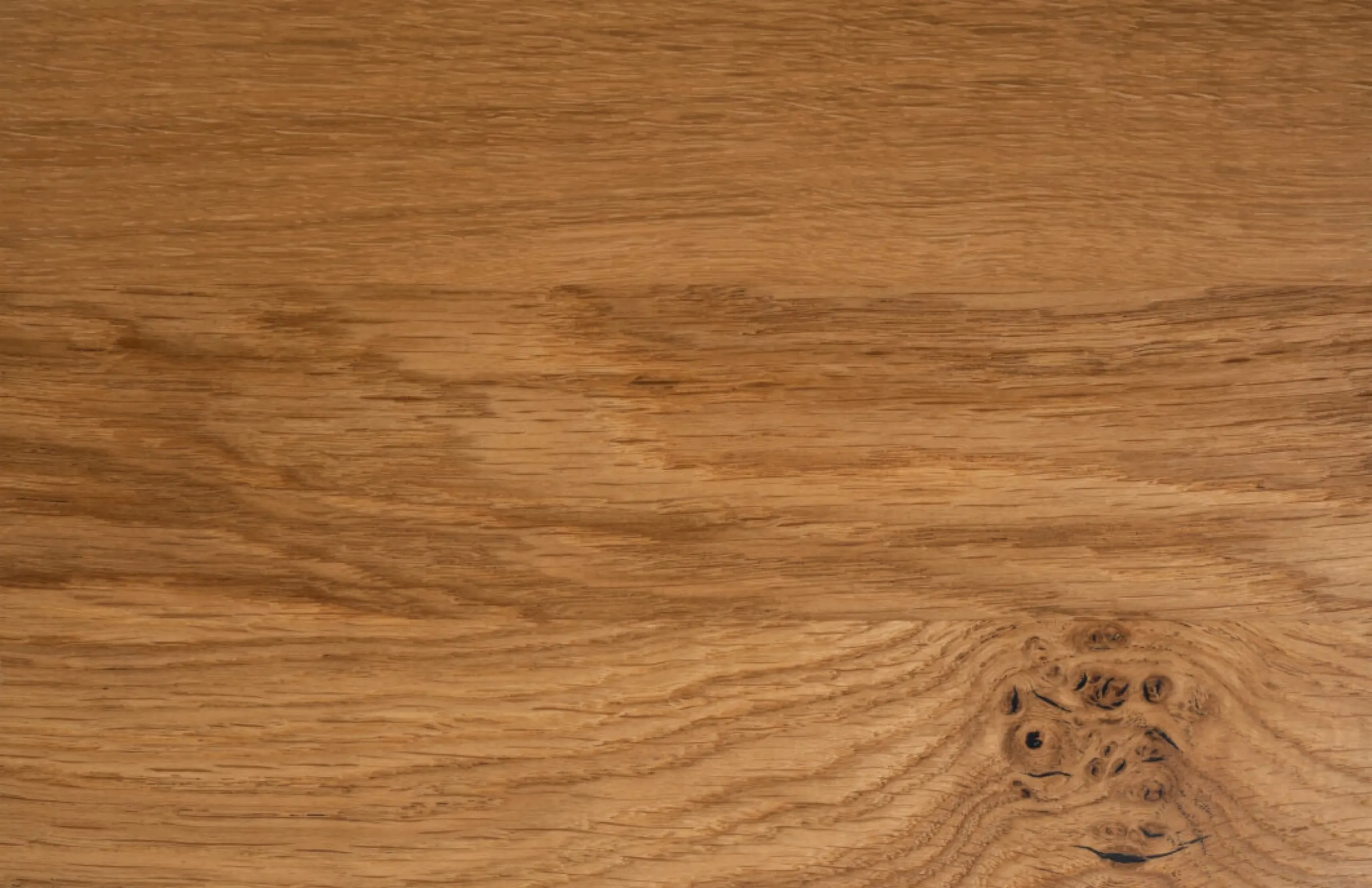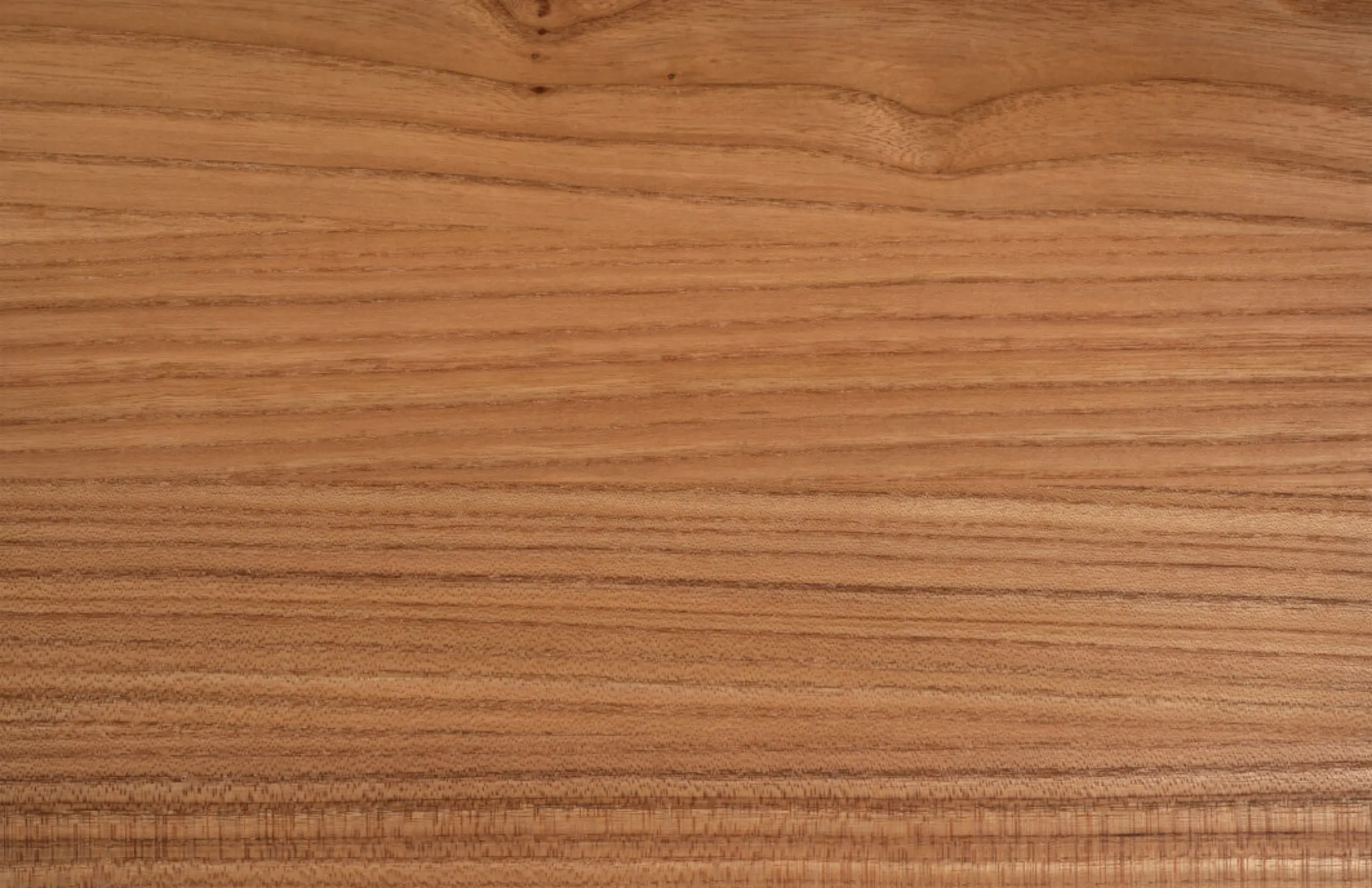
Elm
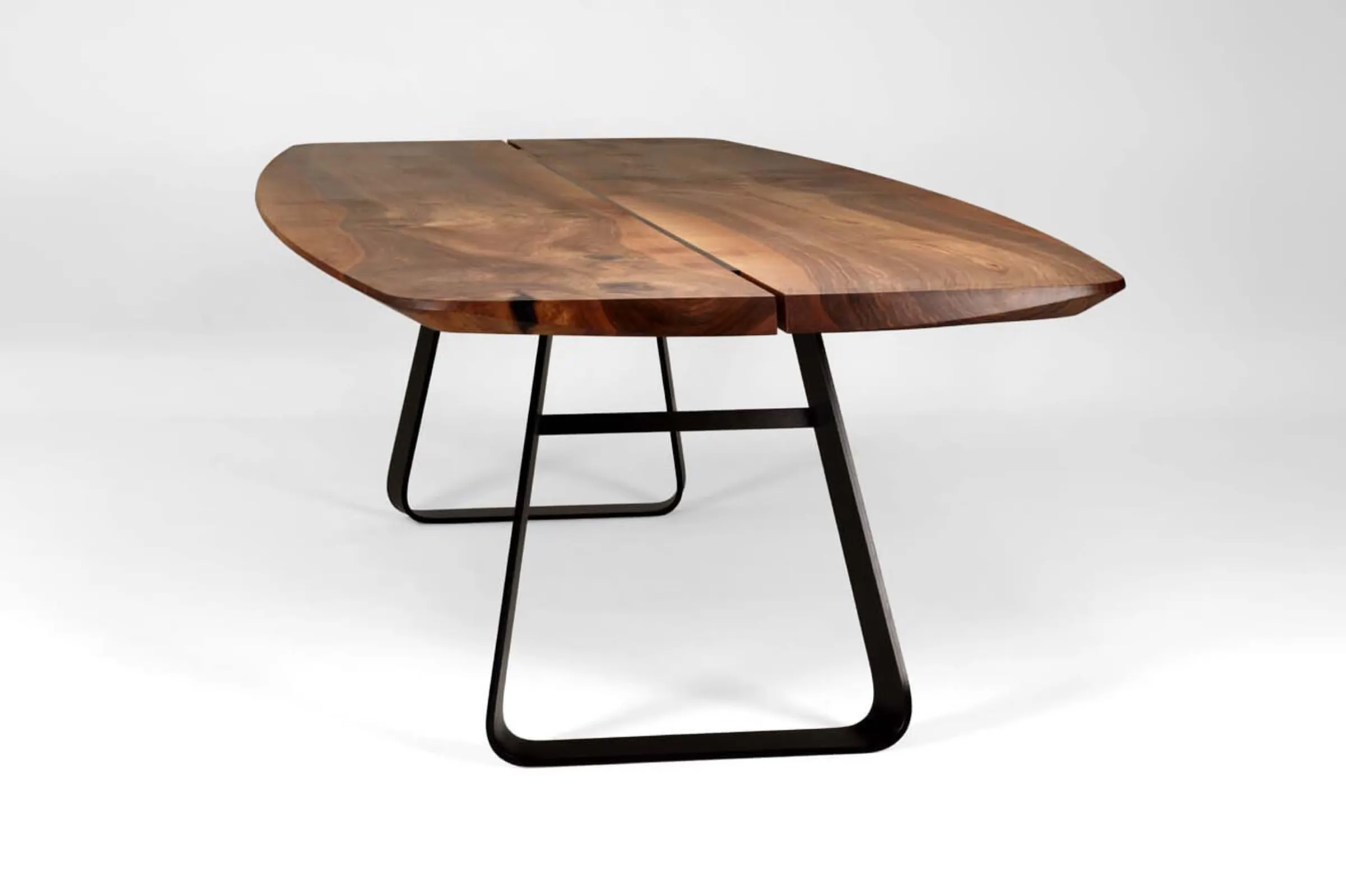
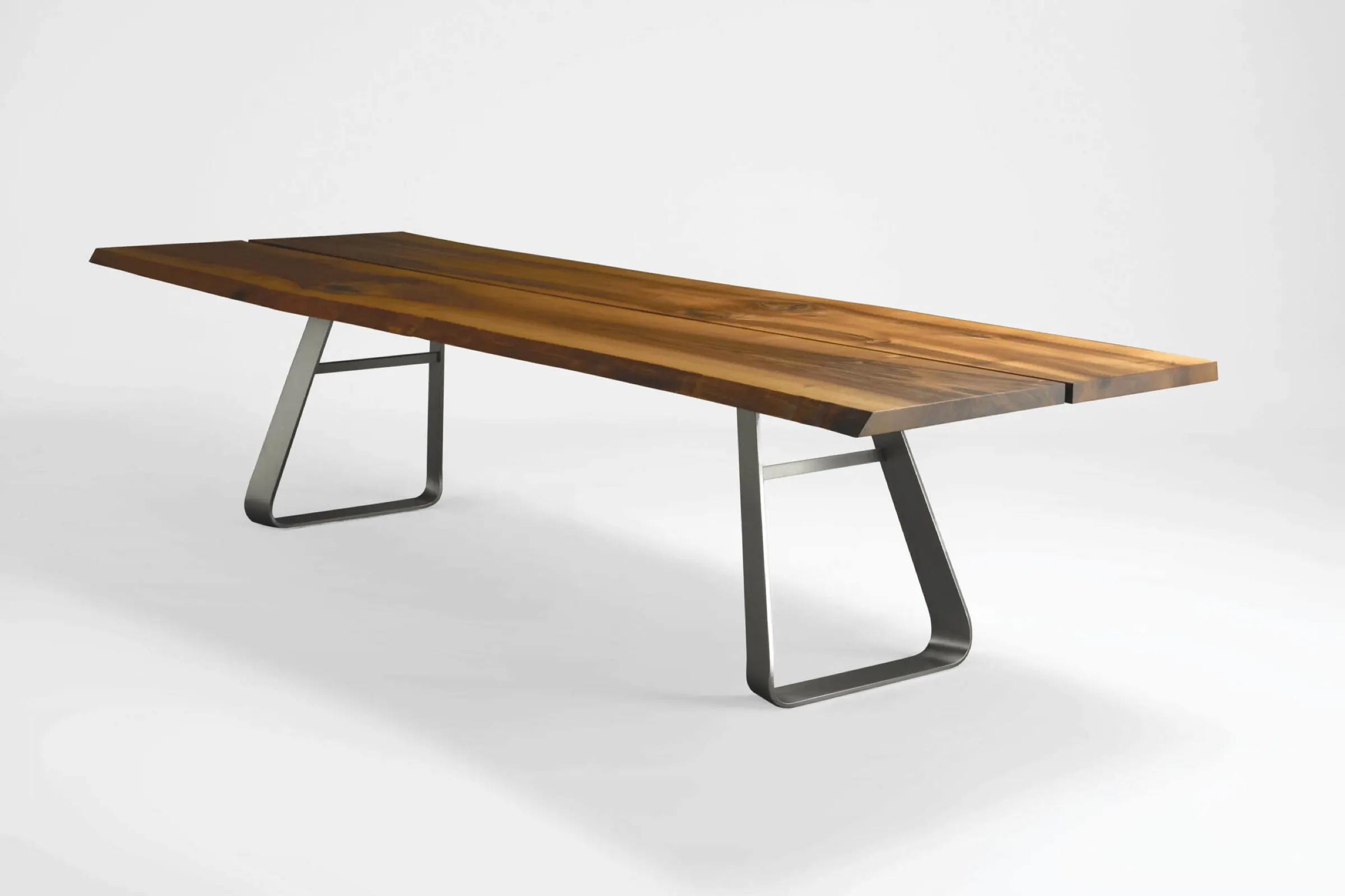
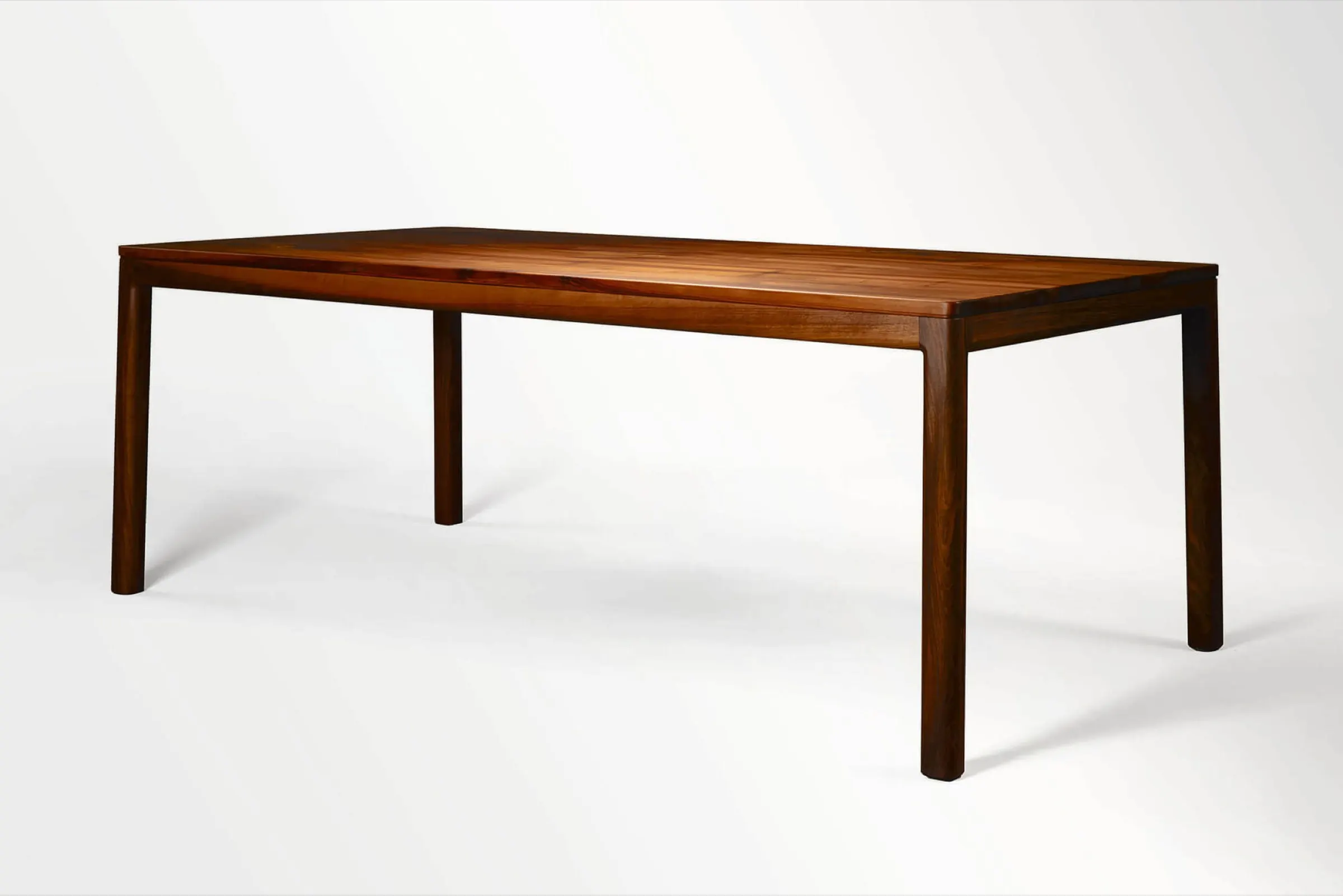
Elm is a European hardwood with a distinctive, often wild grain. At solid., it comes mostly from Switzerland and Germany. Ideal for anyone looking for a table with strong character.
Hardly any native wood shows as much movement as elm.
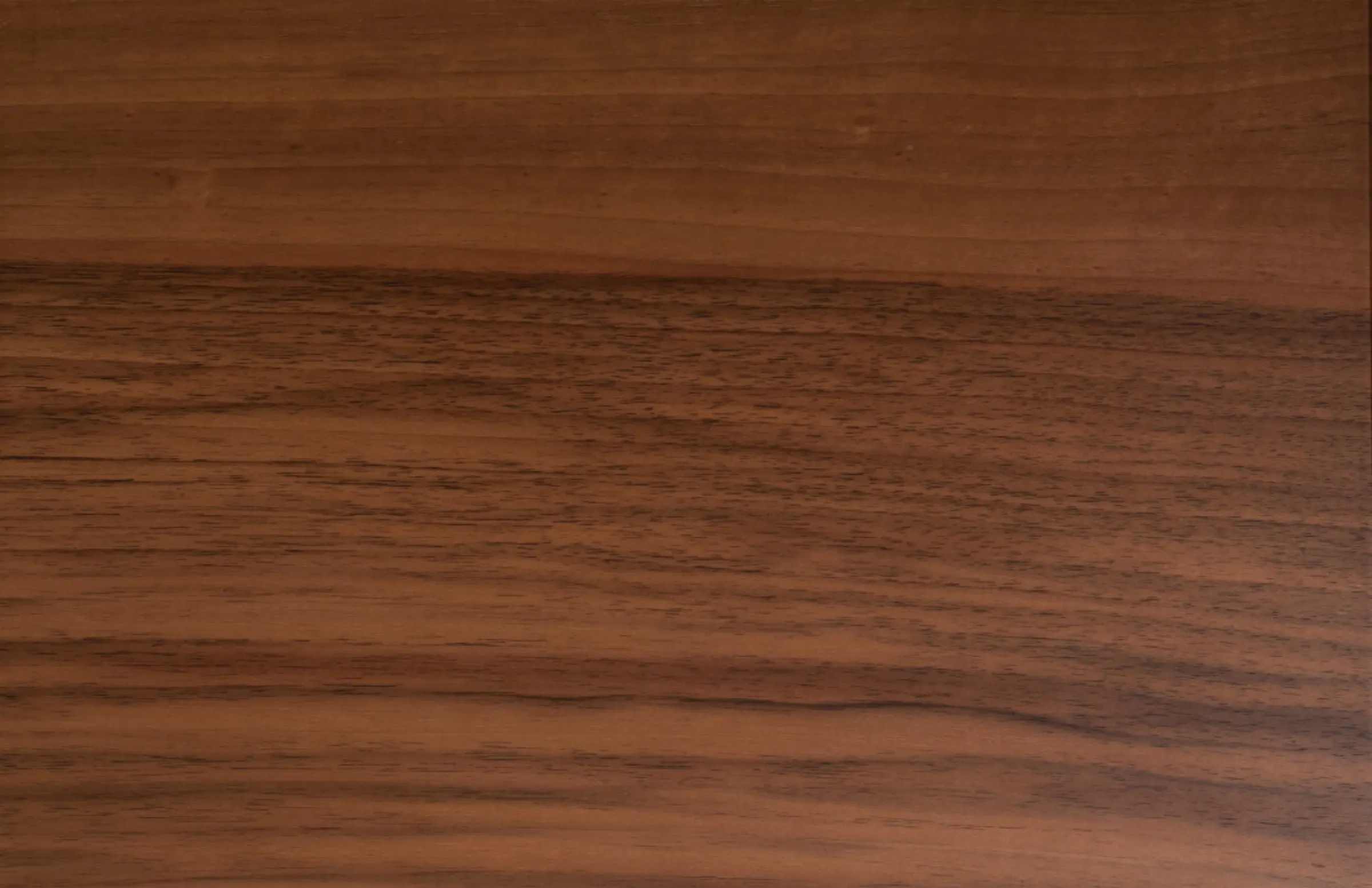
The heartwood is light to dark brown, often with greenish or reddish nuances, while the sapwood is noticeably lighter. The growth rings stand out strongly and, together with irregularities of growth, create a very lively surface. No two elm tables are alike.
Elm is moderately heavy and tough, which makes it robust in everyday use. Over time, the wood darkens slightly and gains warmth.
Dutch elm disease has made elms rare, so good elm wood is sought after. We select the logs carefully and will gladly show you in our showroom in Buttisholz which boards are currently in stock.
Profile
- Botanical name:
- Ulmus glabra
- Origin:
- Europe
- Sourced from:
- Switzerland, Germany
- Colour:
- light to dark brown, partly greenish; light sapwood
- Hardness:
- medium-hard, tough
- Finish:
- oiled or soaped – see Caring for tables properly
FAQ
Is an elm table suitable for everyday use?
Yes. Elm is tough and resilient. With an oiled or soaped finish, small signs of wear can be repaired at any time.
Why is elm so rare?
Dutch elm disease, a fungal infection, has greatly reduced elm populations in Europe. Beautiful, large elm logs are therefore not always available.
Does elm darken over time?
Yes, slightly. Exposed to light, the wood becomes a little warmer and darker over the years.