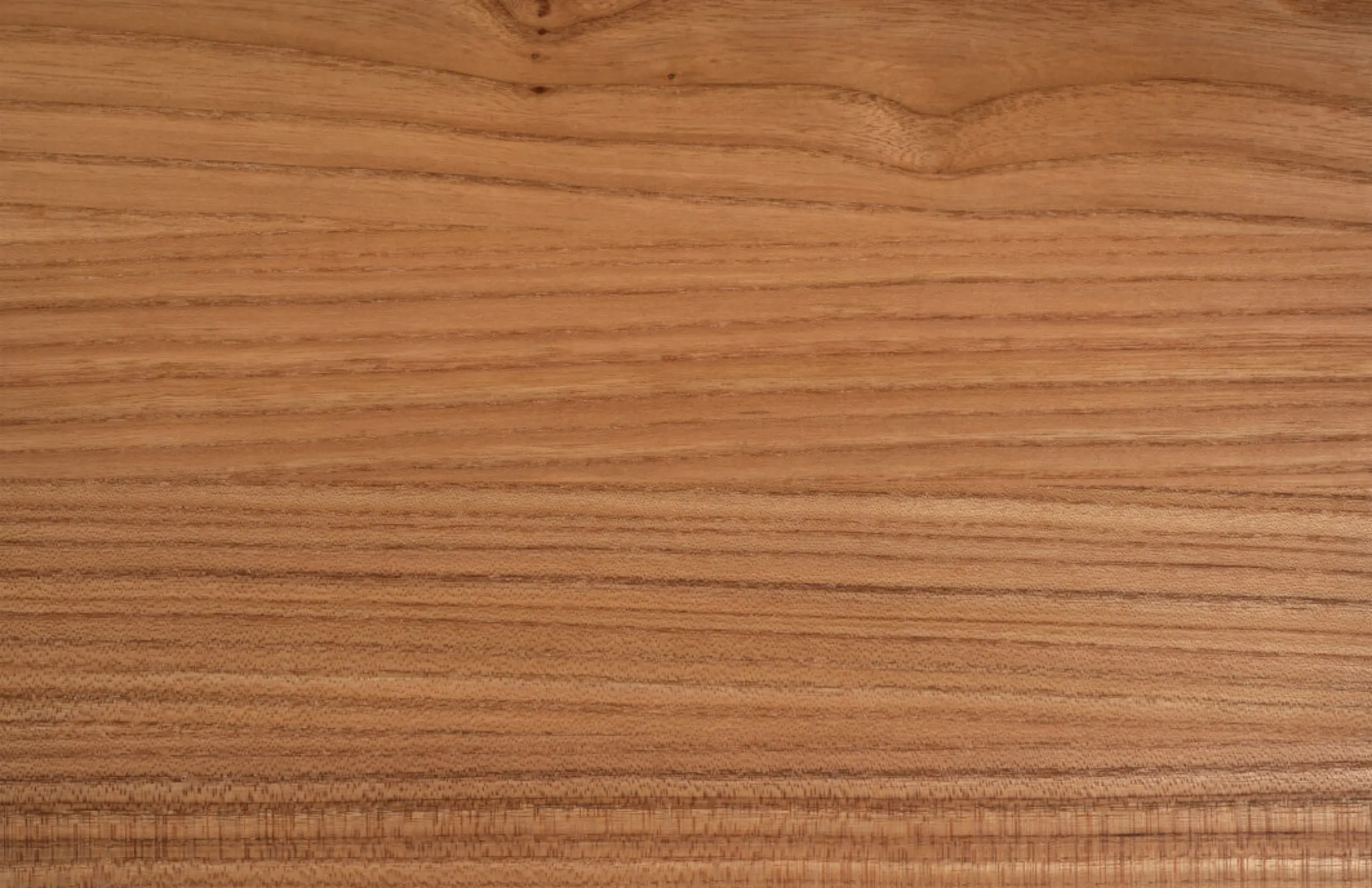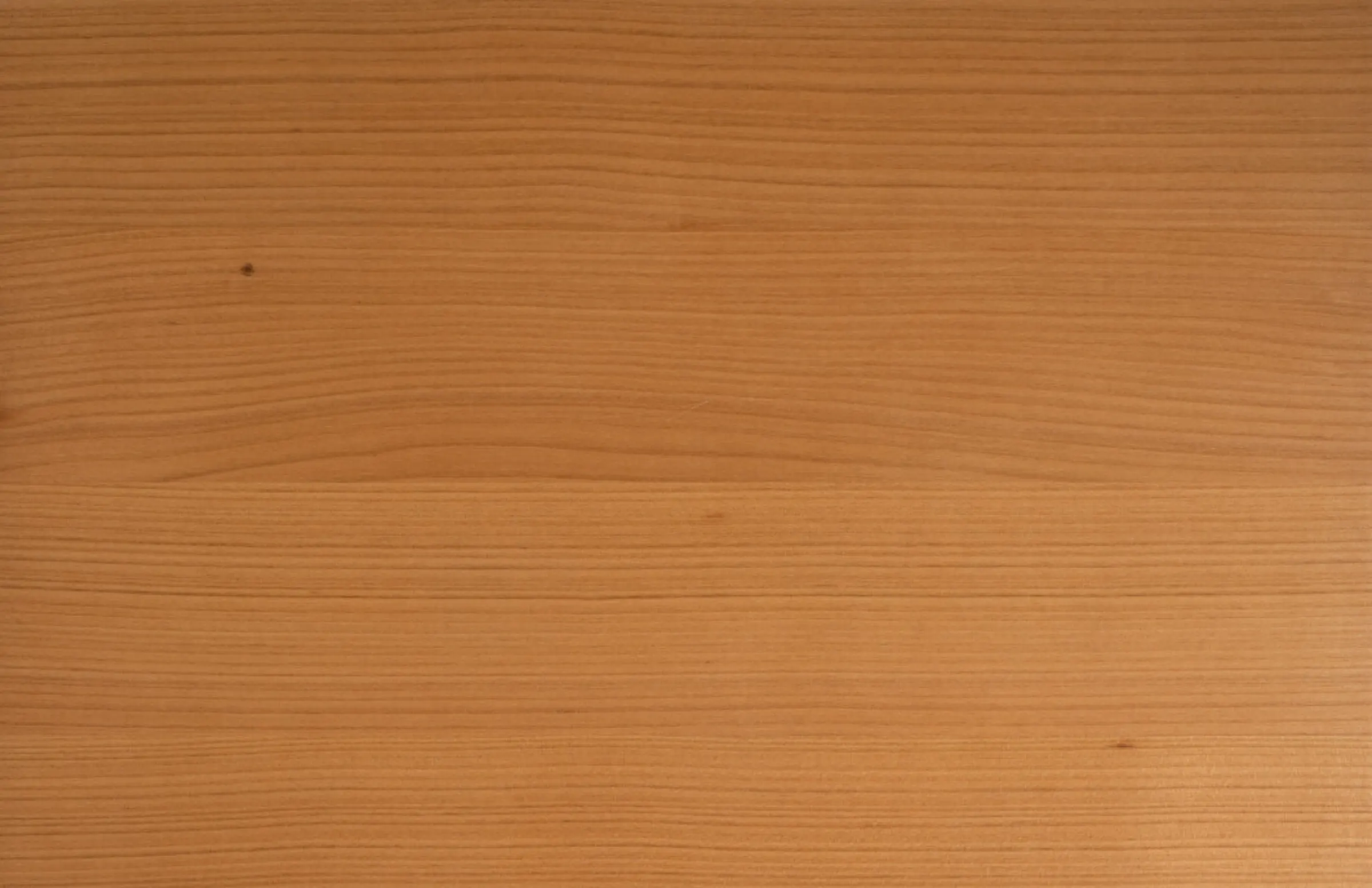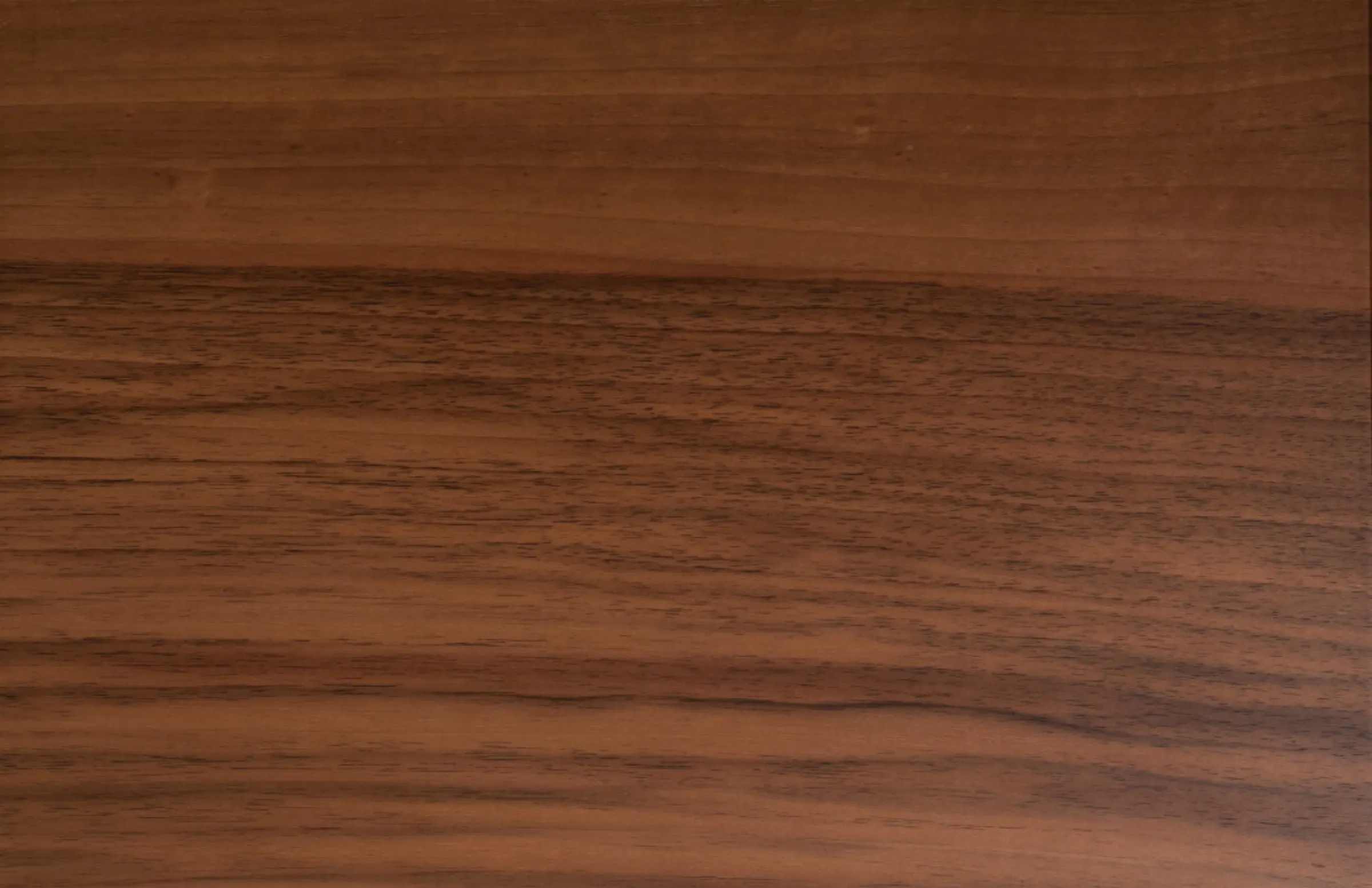
European walnut
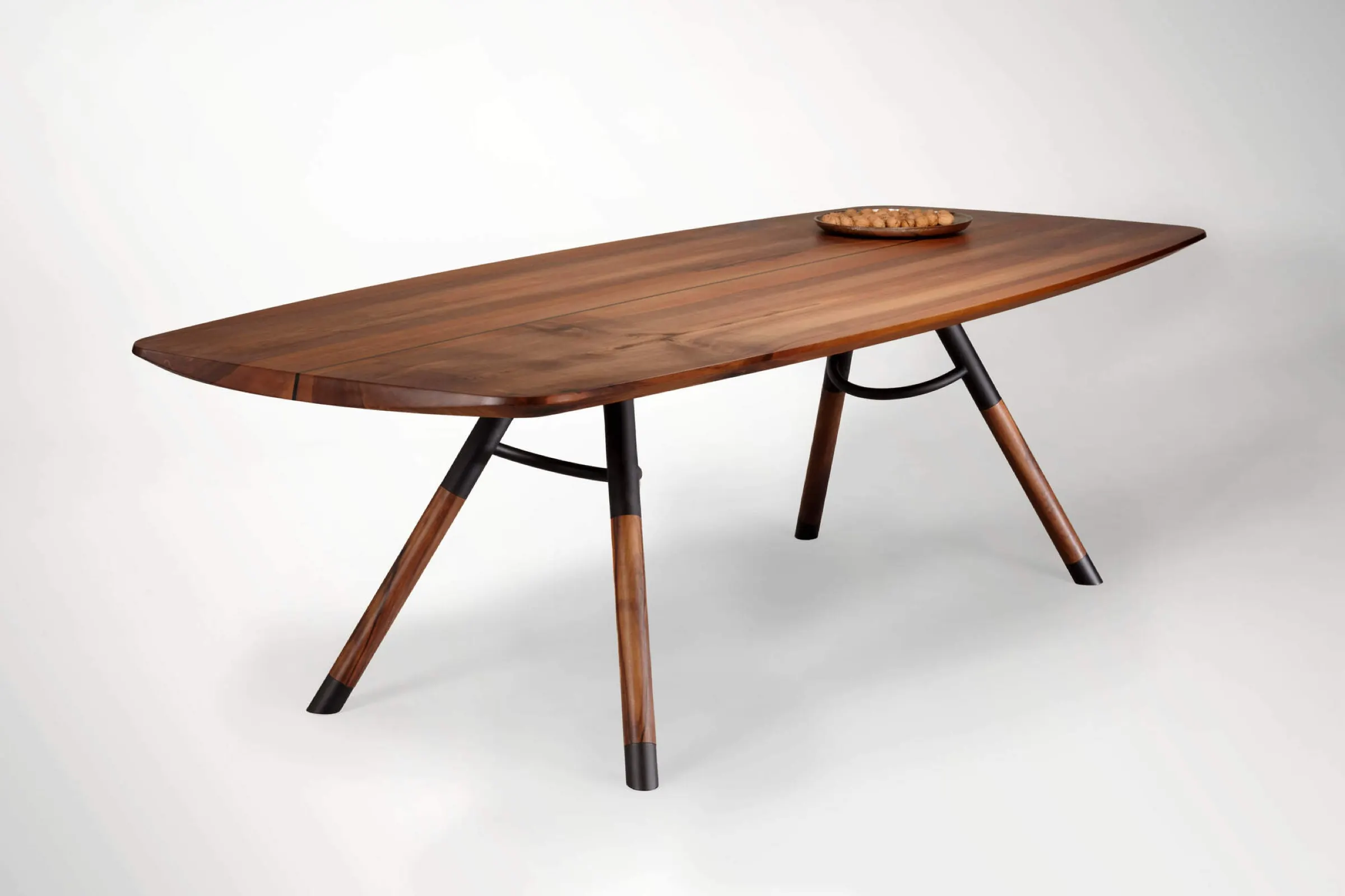
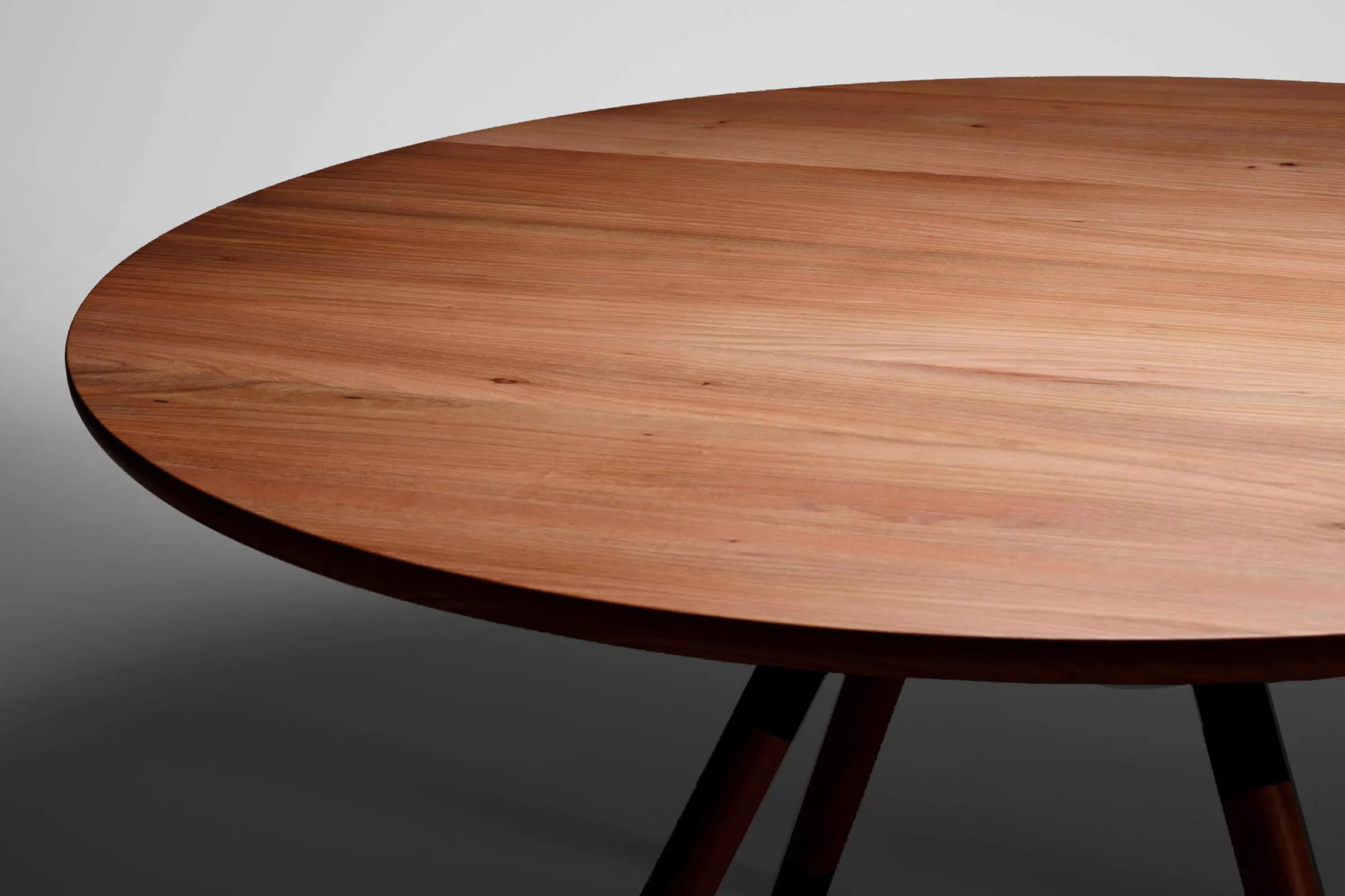
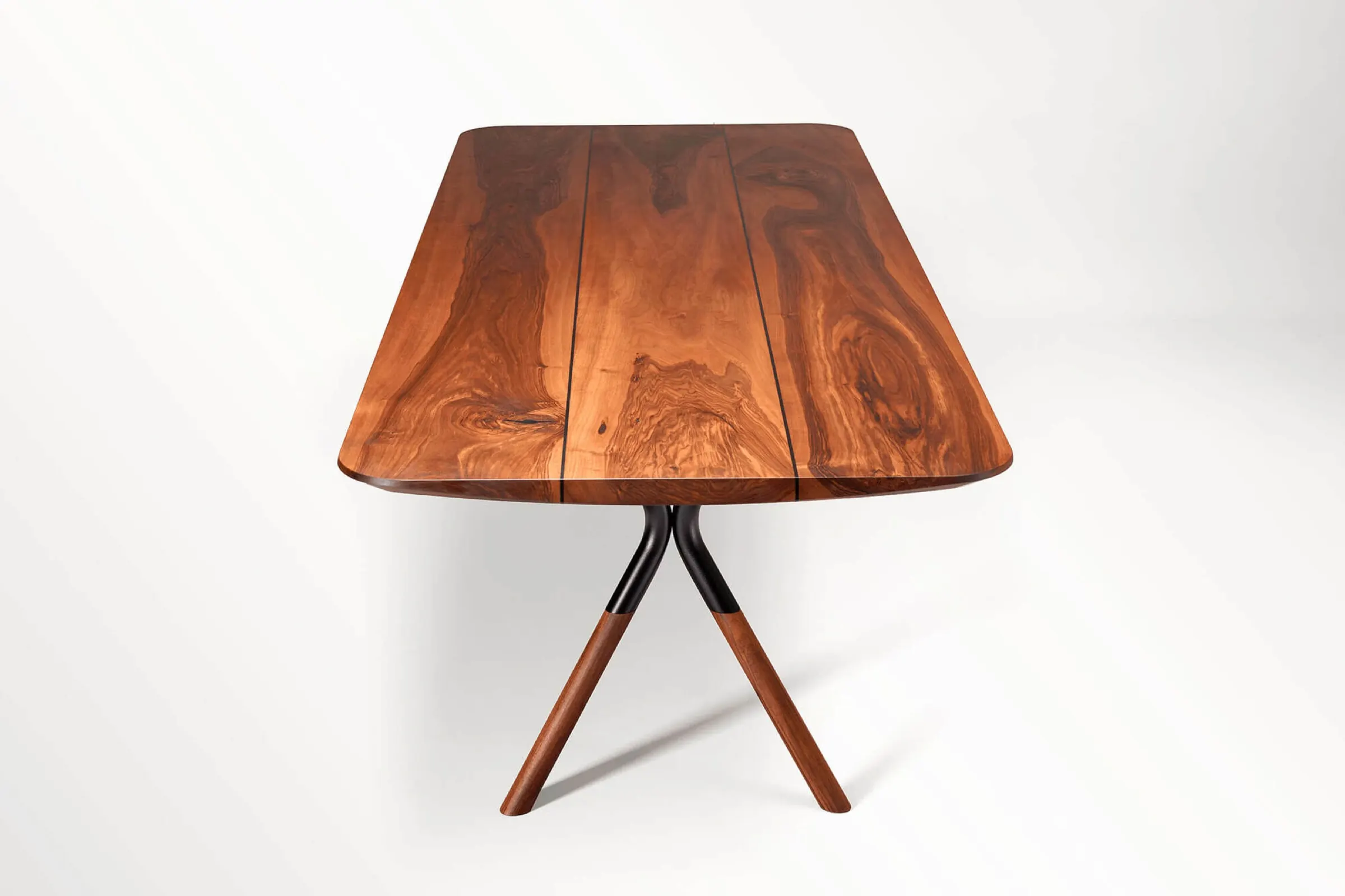
European walnut is one of the finest native woods. At solid., it often comes from Switzerland and from our region. Every log has its own colour and figure; no two walnut tables are alike.
Walnut is the wood most often associated with solid. – and for good reason.
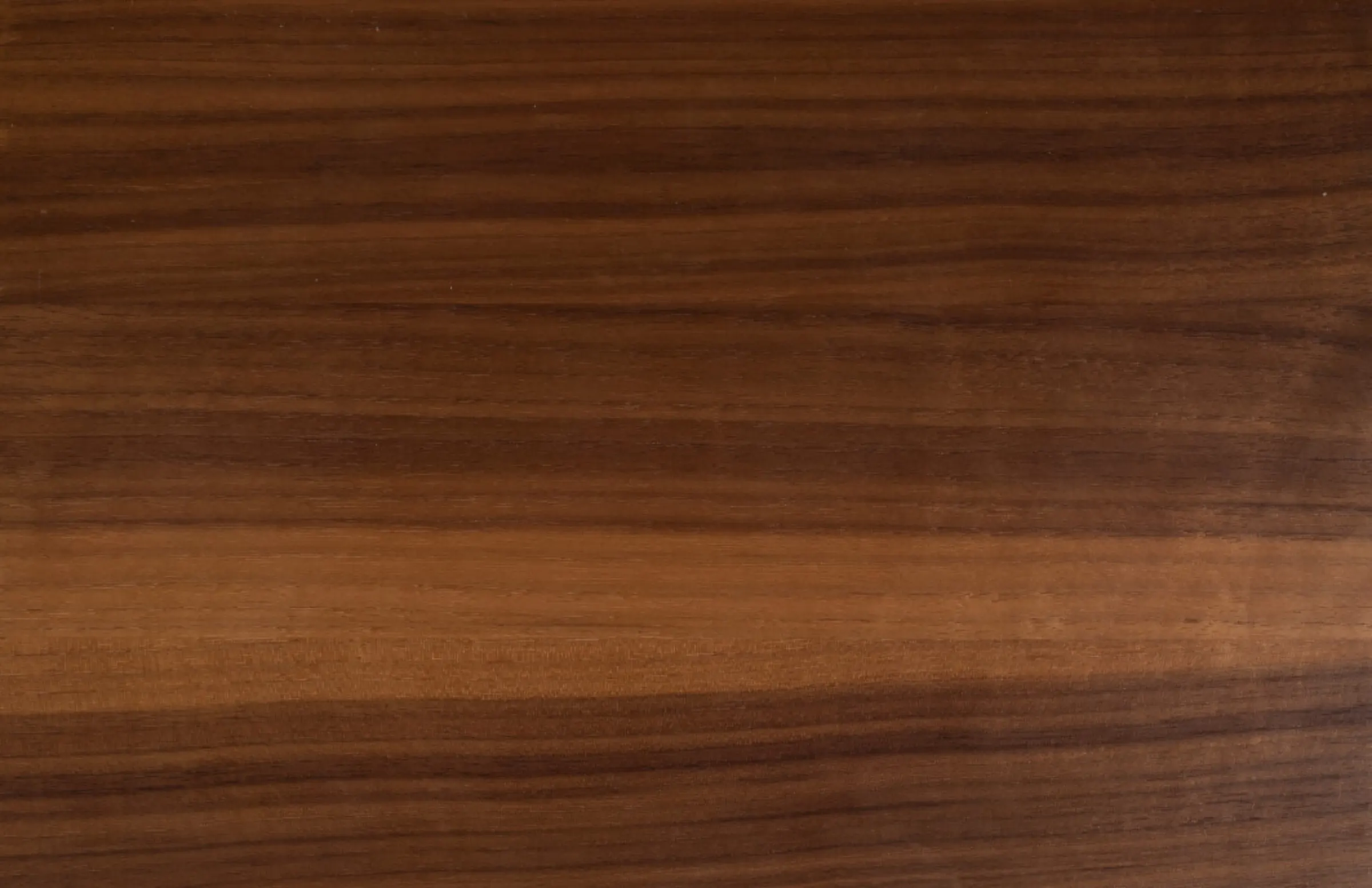
The heartwood is grey to chocolate brown, often with dark streaks and clouds; the sapwood is light. It is precisely the interplay of light sapwood and dark heartwood that makes so many of our tables so lively. Depending on where the tree grew, the colours tend to be cool grey or warm reddish.
A Swiss walnut tree usually needs at least 70 years before its wood can be used for high-quality furniture. We often select the logs ourselves and can therefore tell you the story of your wood.
Walnut is medium-hard, dimensionally stable and pleasant to the touch. Over time, the dark heartwood lightens slightly and becomes warmer.
Profile
- Botanical name:
- Juglans regia
- Origin:
- Southern and Central Europe; cultivated in North Africa, Asia Minor, northern India and China
- Sourced from:
- Switzerland, Germany, the Balkans, Asia Minor
- Colour:
- grey to chocolate brown, light sapwood
- Hardness:
- medium-hard, dimensionally stable
- Finish:
- oiled or soaped – see Caring for tables properly
FAQ
What is the difference between European and American walnut?
European walnut is livelier and varies more in colour, from grey to warm brown. American walnut is more even and darker, closer to chocolate brown.
Does your walnut come from Switzerland?
Largely, yes – often even from our region. Depending on availability, we also source it from Germany, the Balkans or Asia Minor.
Does walnut change over time?
Yes. In light, the dark heartwood lightens slightly and becomes warmer in tone.
Can I choose the walnut for my table myself?
Yes. In our timber store in Buttisholz, you choose the boards for your table together with us. How the consultation works